
The UK Solar Roadmap: Why Better Design Will Decide Which Projects Move Forward

UK solar farm layout reviewed for project development and grid readiness.
The UK has a solar target. The harder question is delivery.
The UK Government’s Solar Roadmap sets a clear direction for the solar sector. It supports the rapid acceleration of solar deployment from over 18GW to 45-47GW by 2030, with the potential to go further if the energy system needs it.
That is a significant opportunity for developers, EPCs, installers, landowners, commercial property owners and asset managers. But it also creates a simple challenge: more solar does not automatically mean better solar.
A project still has to work technically. It has to connect to the grid. It has to fit the site. It has to make sense commercially. It has to be buildable, maintainable and supported by evidence that can survive planning, pricing, finance, procurement and delivery.
The next stage of UK solar growth will not be won by ambition alone. It will depend on the quality of early decisions.
Solar growth is becoming a project quality challenge
The Solar Roadmap is not only about headline capacity. It points towards action across rooftop solar, ground mount solar, skills, supply chains, grid connections and industry collaboration.
For project teams, this means the market may become more active, but also more demanding. More projects will be competing for grid access, planning attention, investment and delivery resource. Weak projects can still enter the pipeline, but they are less likely to move forward smoothly.
A solar opportunity should therefore be tested before too much money and time are committed.
At the early stage, the key questions are practical:
Is the roof, land or site actually suitable?
What capacity is realistic after constraints are considered?
Is there enough energy demand to support the system size?
What export position is assumed?
Is the grid connection route understood?
Are access, maintenance, shading and buildability properly considered?
What information is missing before design, pricing or approval?
This is where early-stage technical review becomes valuable.
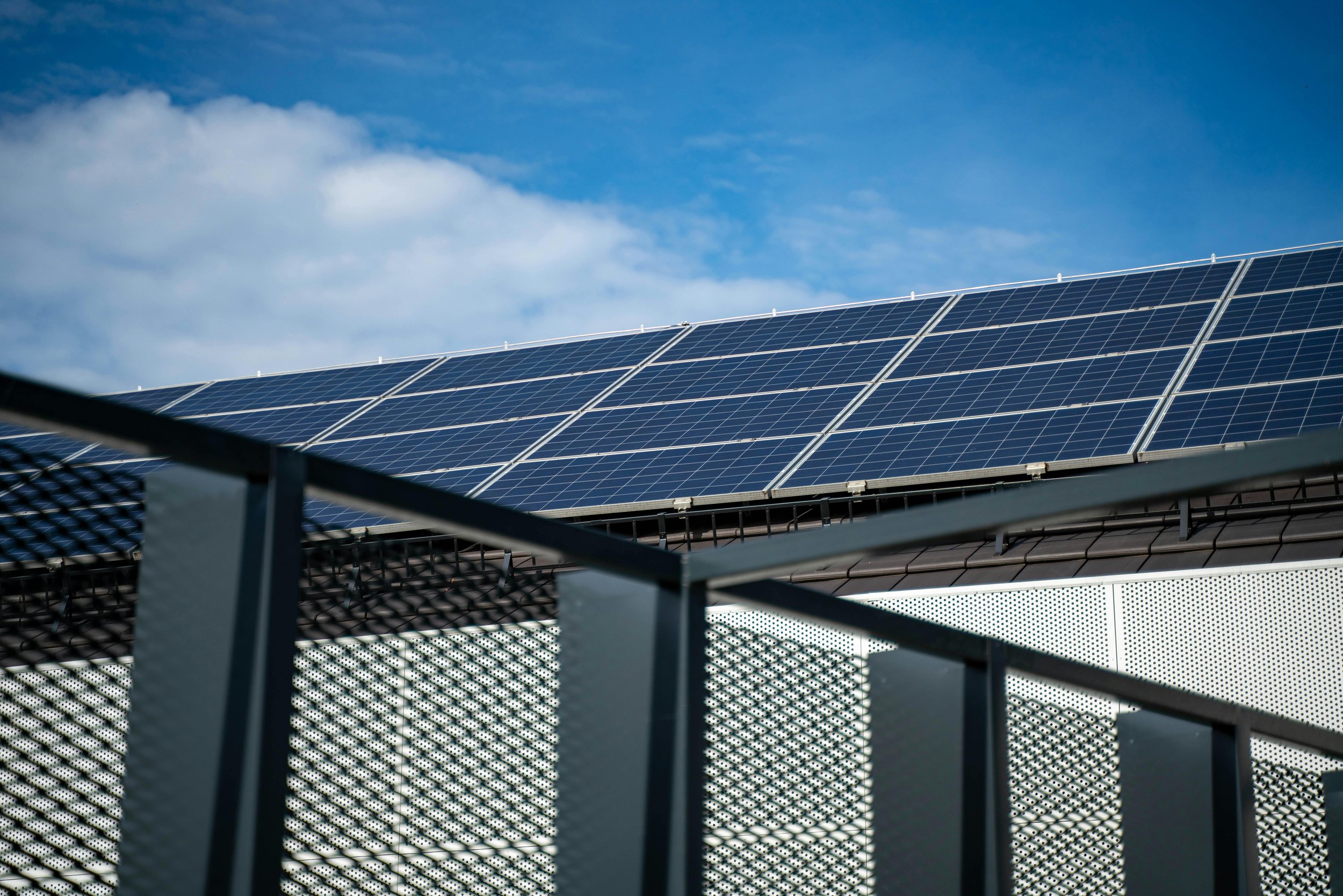
A rooftop PV system
Rooftop and ground-mount projects need different thinking
The Solar Roadmap recognises the role of solar at multiple scales. That matters because a domestic rooftop, a commercial warehouse and a utility-scale solar farm are completely different design problems.
A commercial rooftop project may be shaped by plant areas, rooflights, structural limits, access routes, parapets, shading, cable routes, electrical infrastructure and the building’s operating profile.
A utility-scale project may be shaped by land boundaries, slope, drainage, access tracks, setbacks, environmental exclusions, point of connection, row spacing, inverter zones, cable routing and planning requirements.
A residential project may be shaped by roof geometry, pitch, orientation, obstructions, survey quality, MCS documentation needs and the installer’s preferred equipment.
The common lesson is that usable area is not the same as empty area. Solar design must respond to the real site.
For a deeper explanation of the technical decisions behind good PV design, see Nortcel’s Solar PV Design Guide.
Better early evidence can reduce late-stage problems
Many solar projects become difficult because the first assumptions were not tested properly.
A site may be presented as a strong opportunity because the roof area or land area looks large. Later, the project team discovers that the usable area is smaller, the export capacity is limited, the roof has major restrictions, the proposed battery does not match the load profile, or the yield model depends on assumptions that were never clearly explained.
By that stage, proposals may already have been issued, budgets may be set and stakeholders may expect the project to proceed.
Early review helps prevent this. It turns an opportunity into a more structured technical decision. It can identify constraints, missing information and next steps before the project becomes expensive to change.
This is especially useful for developers, EPCs, consultants and commercial clients managing several possible sites. Not every opportunity deserves the same level of design work immediately. Some need a quick feasibility screen. Some need energy demand review. Some need grid context. Some need a more detailed layout and performance basis.
Nortcel’s Project Development Support is designed for this stage: before the project is fully designed, but after the opportunity is serious enough to test.
What project teams should check now
As the UK solar market grows, project teams should raise the standard of their early project information.
Before progressing a solar opportunity, it is worth checking:
Site constraints
Review roof condition, land boundaries, access, obstructions, shading, plant areas, maintenance zones, environmental exclusions and areas that should be avoided.
Energy demand
Do not rely only on annual consumption. Half-hourly data can reveal when energy is used, whether the solar generation can be used on site and whether storage or export control may be relevant.
Grid assumptions
Understand the existing supply, point of connection, export assumption, DNO position and whether G98, G99 or G100 requirements may influence the design.
Design basis
Check whether the proposed capacity, array layout, inverter strategy, yield assumptions and loss assumptions are technically justified.
Commercial readiness
Make sure the technical evidence is strong enough to support pricing, stakeholder review, board approval, finance discussion or planning work.
For commercial and industrial projects, Nortcel’s Commercial Solar Design & Engineering service can help turn site and energy information into a clearer design route. For larger ground-mount sites, see Utility-Scale Solar Design & Engineering.
The Solar Roadmap creates opportunity, but discipline will decide delivery
The UK needs more solar, but the strongest projects will be those that combine ambition with technical discipline.
A good solar project is not only a capacity figure. It is a set of connected decisions about site conditions, energy use, grid connection, layout, equipment, yield, buildability and long-term value.
The Solar Roadmap gives the sector direction. Project teams now need the evidence, design quality and engineering judgement to turn that direction into deliverable projects.
Have a solar opportunity to test?
Send Nortcel the site information, drawings, energy data or early proposal. We can help review the project route, identify technical risks and define the next step before the project moves further forward.
Discuss a project | Explore project development support
