
Battery Storage Is Moving From Optional Add-On to Core Energy Infrastructure
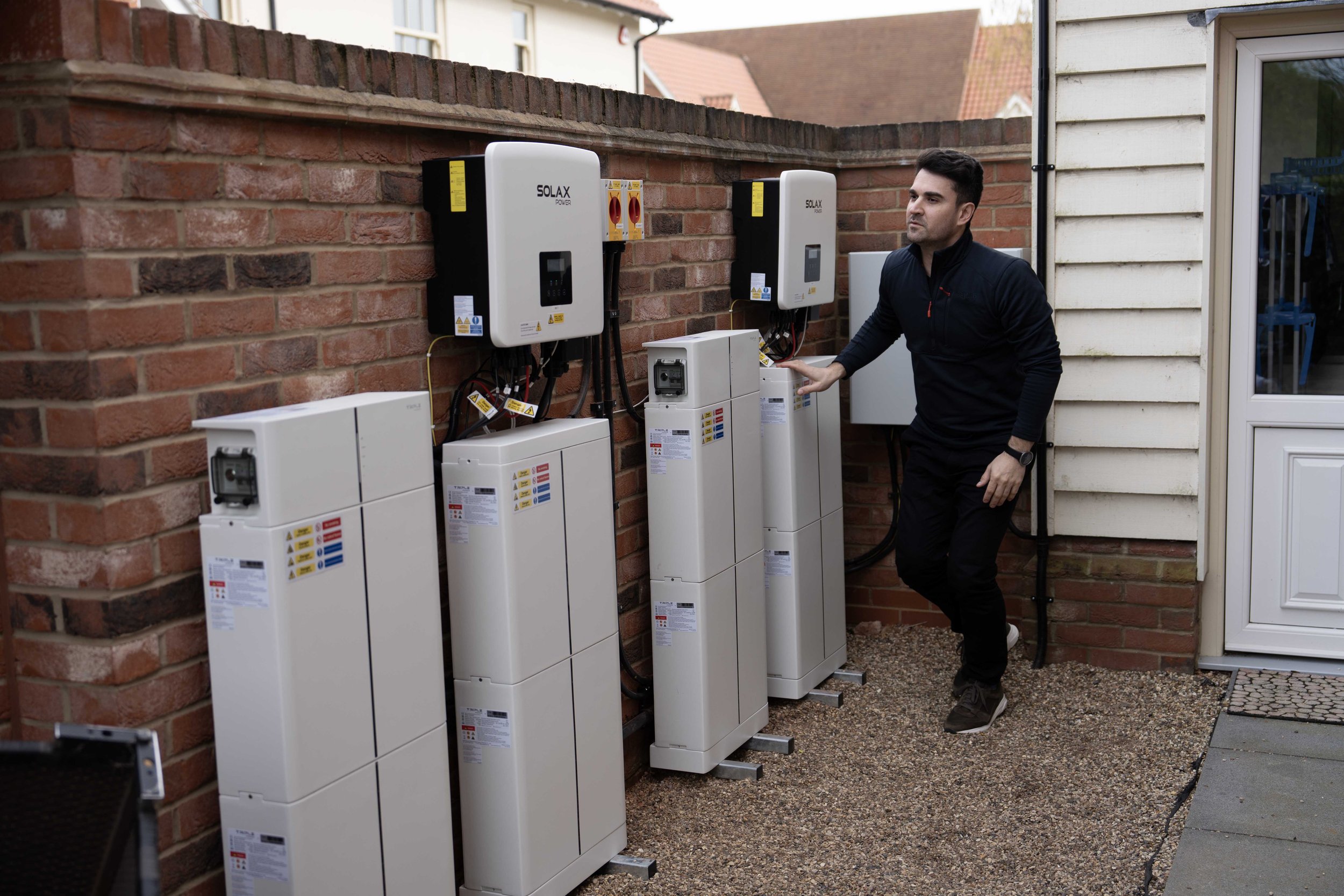
Storage is becoming part of the energy system.
Battery storage is becoming central to how renewable energy projects are designed, financed and operated.
For years, batteries were often treated as an optional extra. A solar PV system was designed first, and storage was considered later if the budget allowed. That approach is becoming less suitable for modern energy projects.
As electricity demand grows, renewable generation increases and grid flexibility becomes more important, battery storage is moving closer to the centre of energy strategy.
But there is an important warning: a battery only adds value when the use case is clear.
A battery should not be included simply because it sounds modern or improves the appearance of a proposal. It should be sized, modelled and justified around real energy behaviour, site constraints and commercial objectives.
Storage is becoming part of the energy system
The International Energy Agency’s Electricity 2026 analysis highlights the growing need for power system flexibility as solar PV, wind, battery storage, EVs, heat pumps and large loads reshape electricity systems.
In the UK, battery storage is also becoming a more visible part of the clean power discussion. The House of Commons Library has highlighted battery energy storage systems as an important technology for storing electricity and supporting the wider energy transition.
GOV.UK now also publishes official statistics for MCS-certified domestic battery installations, with the latest release updated on 28 May 2026.
References:
IEA Electricity 2026 - Flexibility
House of Commons Library - Battery energy storage systems
GOV.UK domestic battery installation statistics
The direction is clear. Batteries are no longer niche. They are becoming part of how homes, businesses, solar projects and electricity networks manage generation, demand and flexibility.
The real question is not “can we add a battery?”
The better question is: what is the battery supposed to do?
A battery can support different objectives, including:
Increasing solar self-consumption
Reducing peak import demand
Managing export limits
Supporting EV charging
Improving site resilience
Preparing for future electrification
Reducing exposure to high-price periods
Supporting time-of-use tariff strategies
Participating in flexibility services where suitable
These are different use cases. They do not all require the same battery size, inverter strategy, control logic or commercial assumption.
A battery that works well for one site may be poorly matched to another.
Annual consumption is not enough
One of the most common mistakes in battery sizing is relying too heavily on annual consumption.
Annual consumption shows how much electricity a site uses over a year. It does not show when that electricity is used.
Battery value depends on timing.
A commercial site may use most of its energy during daylight hours. Another may have strong evening demand. A third may have short, sharp peaks caused by equipment, refrigeration, manufacturing, EV charging or operational processes.
These differences matter.
A battery sizing exercise should ask:
When does the site use electricity?
Is there enough surplus solar generation to charge the battery?
Does demand continue after solar generation drops?
Are peak periods short or sustained?
Does the site operate at weekends?
Is demand seasonal?
Is export limited?
Are EV chargers planned?
Is the battery expected to support backup or resilience?
What tariff or commercial mechanism creates the value?
This is why half-hourly data is so important. It reveals the shape of demand and helps test whether the battery has a realistic job to do.
Solar plus storage should be designed as one system
A PV system and a battery should not be designed separately and forced together at the end.
The PV system affects how much surplus energy may be available. The battery affects how much of that surplus can be shifted. The site load profile affects whether stored energy can be used effectively. The grid connection affects whether export is available, limited or controlled. The tariff affects whether the energy shift has enough commercial value.
These factors are connected.
For commercial and industrial projects, the site operation also matters. A warehouse, school, factory, office, farm, leisure centre and cold storage facility may all behave differently.
Nortcel’s Commercial Solar Design & Engineering service can support solar PV design where storage, EV charging, self-consumption and export assumptions need to be considered as part of the wider project.
For earlier-stage opportunities, Nortcel’s Project Development Support can help test whether PV, battery storage or a hybrid energy route is worth progressing.
Poor storage assumptions can weaken a strong project
Battery storage can improve a project, but it can also make a proposal look stronger than it really is if the assumptions are not tested.
Common risk areas include the following.
Oversized batteries
A battery may be too large for the available surplus generation, site demand or commercial use case. Oversizing can increase cost without improving value.
Weak cycling assumptions
A savings model may assume the battery charges and discharges more often than the site profile realistically supports.
Unclear export logic
The proposal may not explain whether the battery is supporting self-consumption, export control, tariff optimisation or another use case.
Missing degradation assumptions
Battery performance changes over time. Proposals should be clear about usable capacity, warranty assumptions and long-term behaviour.
No tariff sensitivity
Battery value can depend heavily on import tariffs, export rates, demand charges and time-of-use pricing.
Weak integration with EV charging
EV charging can strengthen the case for storage, but only when charging behaviour, electrical capacity and operating patterns are properly understood.
No control strategy
A battery’s value depends on how it is controlled. A design should explain the intended operating logic, not only the battery capacity.
Battery storage is an engineering decision
Battery storage is becoming more important, but it should not be treated as a generic add-on.
A strong battery proposal should explain:
Why the battery is included
What demand profile it is responding to
How it interacts with solar generation
How it will charge and discharge
What export assumption is being used
What tariff or commercial logic supports the investment
What limitations are included in the model
What risks or information gaps remain
When these points are clear, clients can make better decisions.
When they are missing, the battery may become a costly assumption rather than a valuable asset.
Nortcel’s Independent Solar Design Risk Review can help review PV plus battery proposals before clients commit capital.
Test the battery before committing
Battery storage can be powerful, but only when it has a defined purpose and a credible design basis.
Before approving a PV plus battery project, project teams should review the half-hourly data, solar generation profile, export assumption, battery use case, tariff logic and control strategy.
Planning solar, battery storage or wider energy infrastructure?
Nortcel can review proposal packs, half-hourly data, bills, export assumptions and design information to help test whether the battery sizing and commercial assumptions are technically credible.
Request a design risk review | Discuss a project
References
IEA Electricity 2026 - Flexibility
IEA Electricity 2026
House of Commons Library - Battery energy storage systems
GOV.UK MCS-certified domestic battery installation statistics
