
Off-grid, still connected: a four-day solar experiment in the Icelandic Highlands
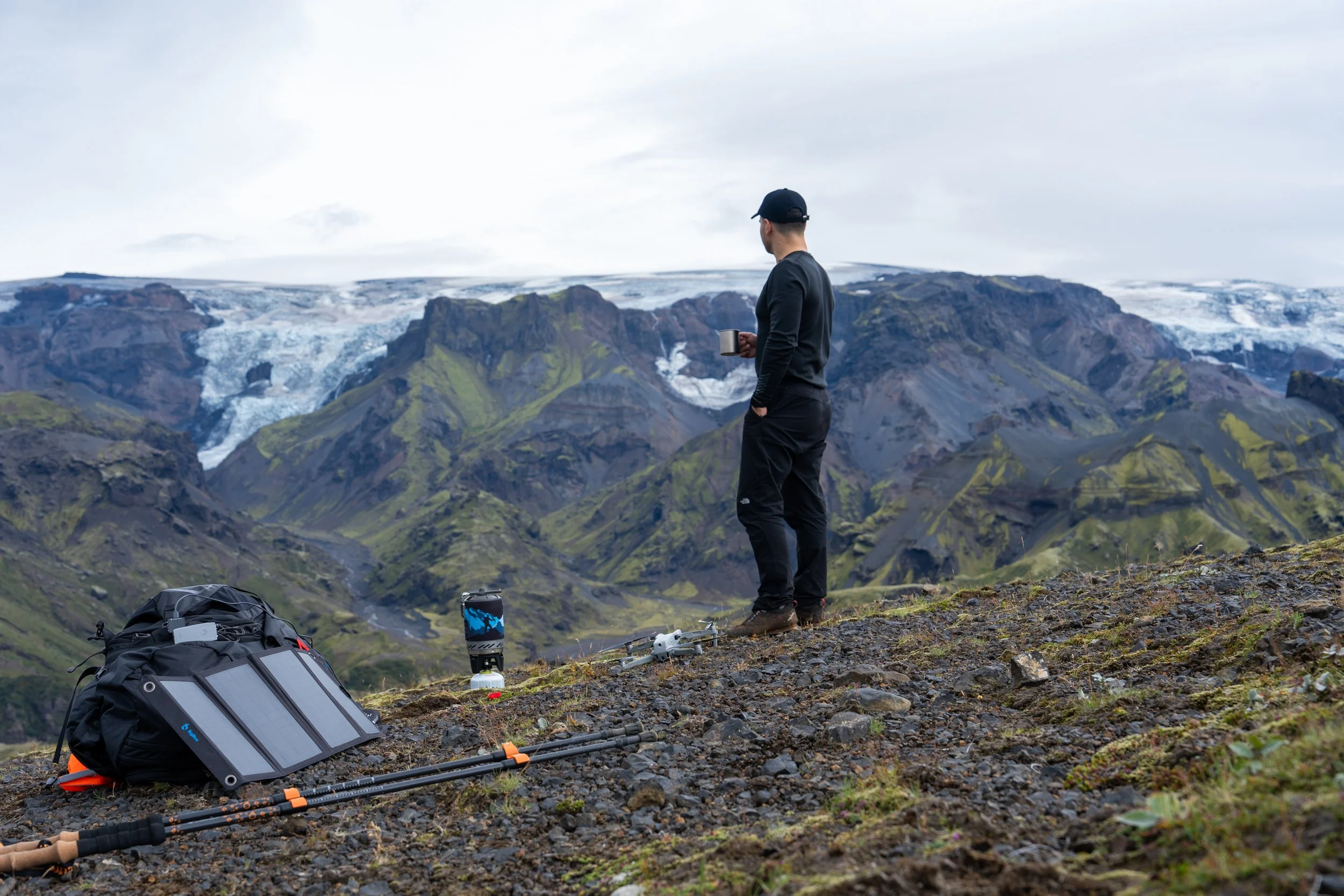
overlooking Þórsmörk with panel and equipment
FIELD NOTES 01
Could a 28 W folding solar panel keep a camera, drone, phone and safety equipment running for four days without access to grid electricity?
In August 2025, I spent four days solo backpacking through the Icelandic Highlands.
I went primarily to hike and photograph the landscape. But with a camera, drone, phone, headtorch, satellite communicator and multiple batteries travelling with me, the trip also created a simple engineering question:
Could a portable solar system this small provide enough useful energy to keep me electrically self-sufficient for the entire trip?
The answer was yes.
A very small off-grid energy system
The generation source was a 28 W nominal BigBlue folding solar charger.
Five additional drone batteries provided more than spare flight capacity. They could also function as power banks, effectively becoming the storage layer of the system.
The arrangement was therefore very simple:
solar generation → battery storage → electrical loads
Those loads included the drone, phone, headtorch, satellite communicator and other portable electronics used throughout the expedition.
There was no grid available to compensate for a poor energy balance.
Variable generation in a variable environment
The operating conditions were anything but controlled.
At camp, the panel could be positioned and left relatively stationary. While hiking, it travelled with the backpack, so orientation and solar exposure changed continuously.
The Icelandic weather added another variable.
There were periods of sunshine, cloud, rain and rapid transitions between them. Late August still provided long daylight hours, which gave the system considerable opportunity to collect energy even when conditions were not consistently clear.
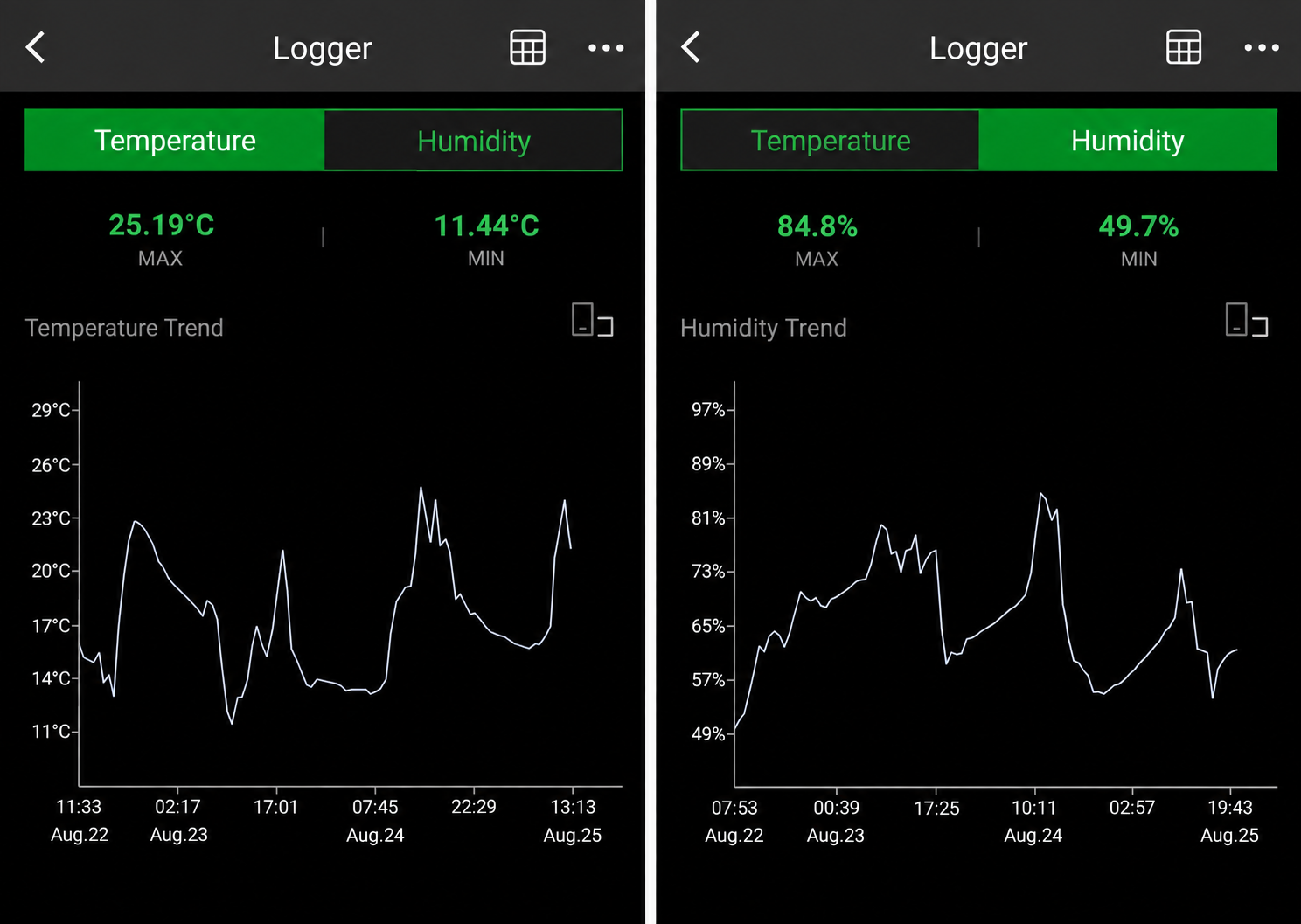
A separate environmental logger recorded conditions throughout the expedition.
The measured range was:
Temperature: 11.44°C to 25.19°C
Relative humidity: 49.7% to 84.8%
The readings are environmental logger measurements rather than module-temperature measurements, but they provide useful context for the changing conditions in which the system was operating.
Iceland was excellent for photography.
It was somewhat less committed to providing Standard Test Conditions.
Measuring the electrical system
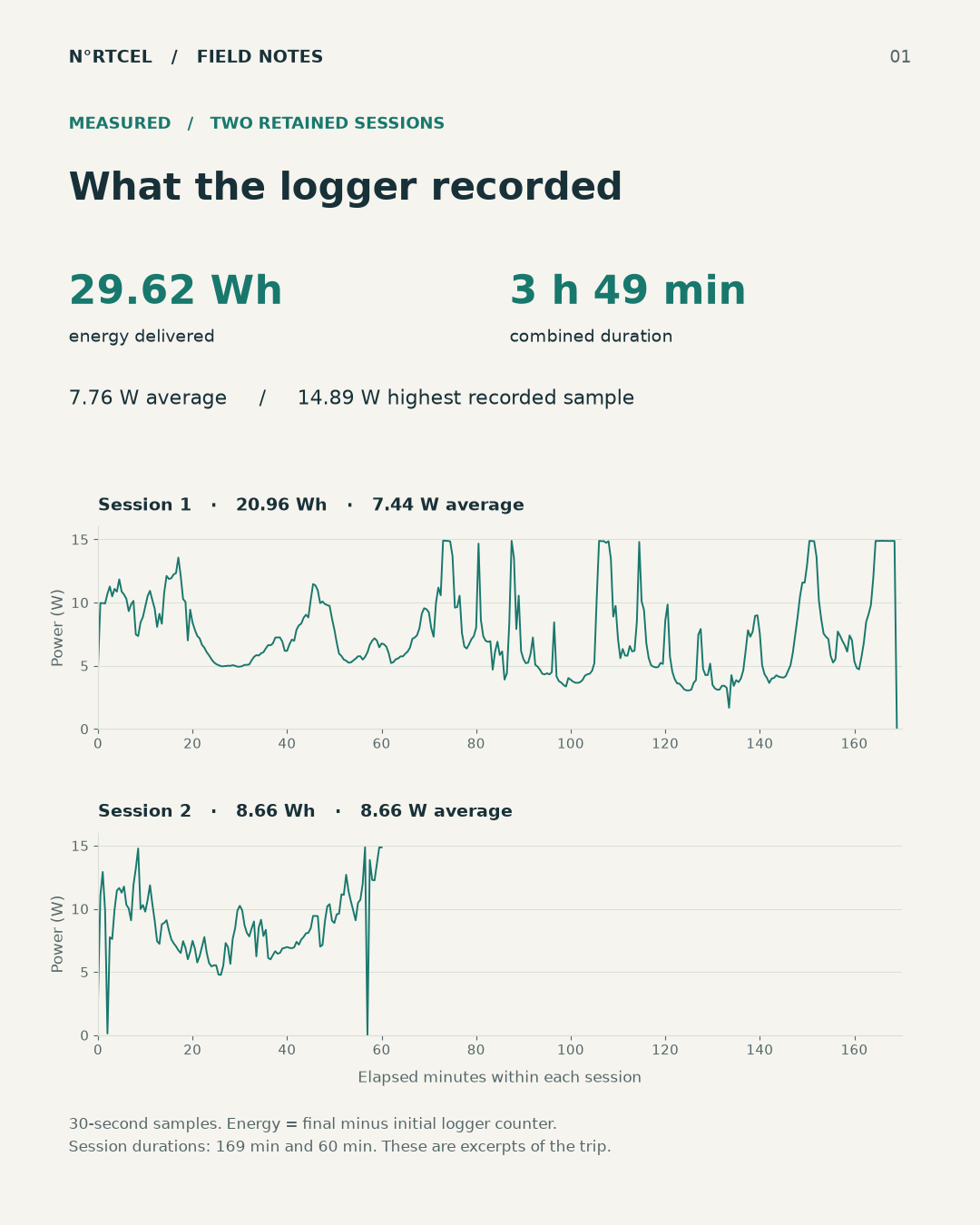
A USB power datalogger was added to one of the charging paths to record voltage, current and delivered power.
Two retained measurement periods contain a combined:
29.6 Wh of delivered electrical energy
3 hours 49 minutes of logging
7.8 W average delivered power
14.9 W highest recorded sample
These measurements should not be interpreted as a performance test of the 28 W panel.
The logger measured one electrical charging path rather than total module output, there was no calibrated plane-of-array irradiance measurement, panel orientation was changing, and the surviving datasets represent only part of the four-day expedition.
That distinction matters.
The purpose of the experiment was not to determine whether the panel could reproduce its nameplate rating under controlled conditions.
The question was much more practical:
Could the complete system supply enough energy for the actual demand?
It did.
Capacity matters. Energy balance matters more.
At commercial scale, solar engineering involves considerably more sophisticated modelling, but one basic principle remains unchanged.
Installed capacity alone does not tell us whether an energy system will work.
Generation has to occur at the right times and in sufficient quantity. Storage has to bridge mismatches between generation and demand. Loads have to be understood. Losses and operating conditions matter.
On this trip, those concepts became unusually tangible.
Every watt-hour had to be generated locally, stored somewhere and eventually used by a real load.
There was no grid available to hide a poor energy balance.
Off-grid infrastructure in the Highlands
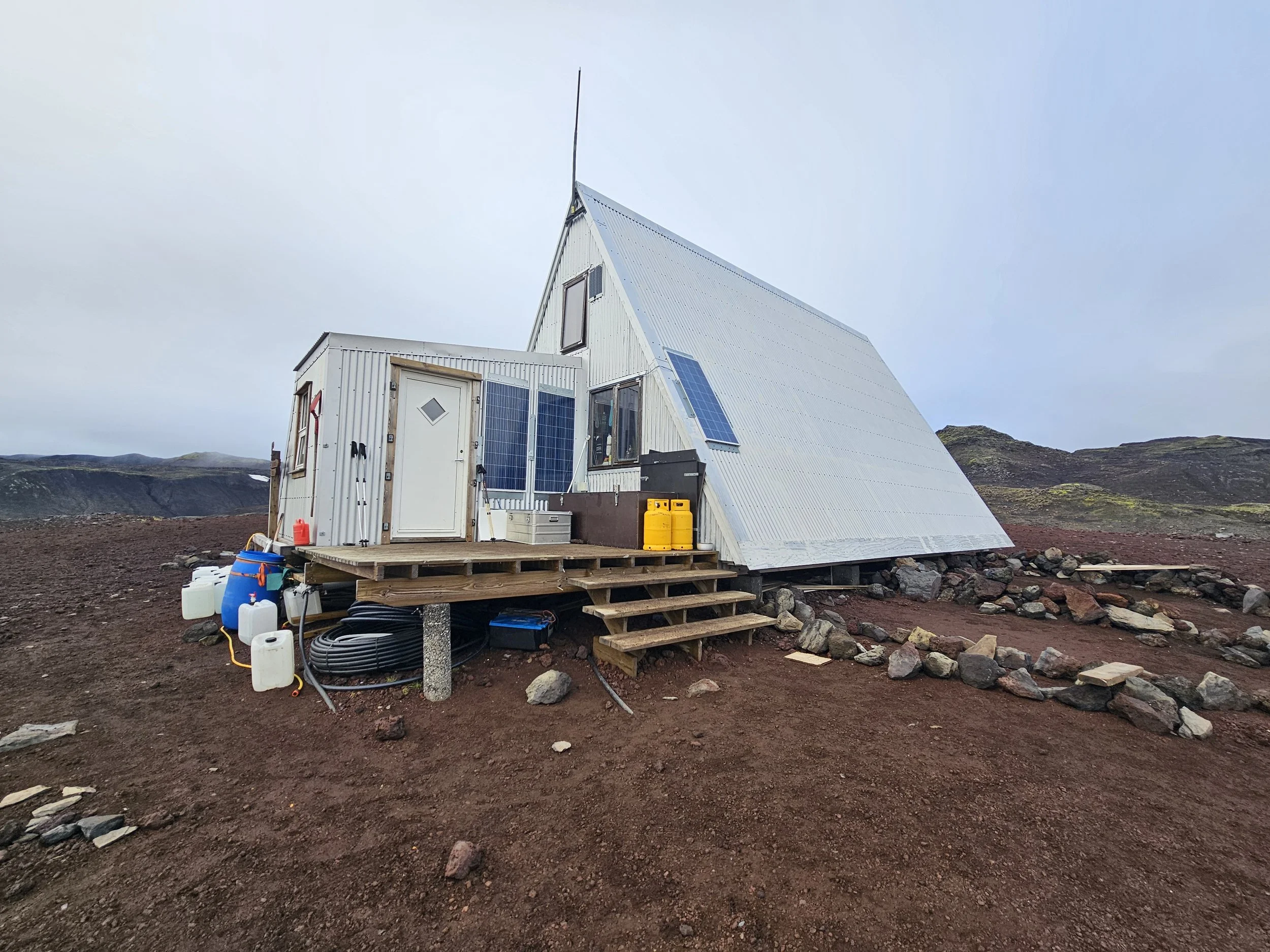
One place I particularly wanted to reach was a remote mountain refuge.
Its infrastructure illustrated the same off-grid reality at a very different scale. There was no conventional electricity supply, only a small amount of local solar generation. I was told its water was supplied from a glacier-fed source several kilometres away and had to keep flowing to prevent the line from freezing.
Infrastructure that is almost invisible in a city becomes very visible in an environment like this.
Electricity comes from somewhere.
Water comes from somewhere.
And when there is no large network behind you, the relationship between resources, storage and consumption becomes difficult to ignore.
The Iceland Touring Association similarly advises hikers that electricity for charging devices cannot normally be relied upon in the huts along the Laugavegur route. fi.is
The actual result
The camera equipment remained operational.
The drone flew.
The phone remained charged.
The headtorch and satellite communicator remained available.
And over the four days, no grid charging was required.
For a 28 W system carried through the Icelandic Highlands, that was the result that mattered.
Off-grid. Electrically self-sufficient. Still connected.
There was one design problem
The electrical system worked rather better than the packing strategy.
Trying to prepare for every contingency resulted in a backup for the backup and a starting backpack weight of approximately 29 kg.
At one point, a mountain ranger came over specifically to say that he had never seen a backpack that size.
Redundancy is excellent engineering until you have to carry all of it yourself.
